

Lower back pain is a discomfort or tension felt in the lower part of the back, between the last ribs and the gluteal area. In most cases, this pain is associated with sports, not a serious injury, but rather accumulated muscle overload linked to factors such as core weakness, poor posture, and insufficient recovery between workouts.
Lower Back Pain: What You Need to Know
Almost everyone who trains regularly has, at some point, experienced that stiffness in the lower back that appears without warning.
The good news is that it is rarely serious. The bad news is that if ignored, it tends to return and can worsen.
Most cases do not have an identifiable traumatic cause. It develops over months, through the accumulation of small imbalances, such as lack of exercise to strengthen the core, intense training without room to recover, and especially the time spent sitting, whether in the office or in the car.
This last factor often goes unnoticed, but long periods without moving the hips reduce mobility and alter the pattern of muscle activation that protects the lower back during exertion. It is this accumulated wear and tear that, sooner or later, the body can no longer compensate for.

Why Does Lower Back Pain Arise?
During squats, weightlifting, or even long-distance runs, the lower back supports a large part of the load. Ideally, this effort should be distributed by the core (deep abdominal and lower back muscles), glutes, and hamstrings. When these muscle groups are weak or underactive, the lumbar spine ends up compensating, taking on more work than it should, and pays the price workout after workout.
Another important factor is the time spent sitting. Whether in the office or in the car, long periods without moving the hips reduce mobility and alter the pattern of muscle activation that helps protect the lower back during exercise.
Putting all this together, the result is predictable. Stiffness upon waking, discomfort at the end of an intense training day, and, in more advanced cases, pain that no longer disappears with rest alone.
Heat or Cold for Lower Back Pain?
It depends on the stage of the pain.
In the first 24 to 48 hours after an acute injury, when there is inflammation, cryotherapy is usually the best solution. It reduces blood flow to the affected area and controls swelling.
However, for the most common type of lower back pain in athletes, pain that arises gradually due to muscle tension and not trauma, heat tends to be more effective. It increases blood circulation and oxygen supply to the muscle, and helps relax contracted muscles without causing the stiffness derived from prolonged ice application.
In most training-related cases, the problem is accumulated tension. Therefore, heat combined with gentle mechanical stimulation usually yields better results than using either method in isolation.

Heat and Vibration: Why They Work Together
Therapeutic heat stimulates vasodilation, allowing more oxygen and nutrients to reach the muscles and increasing tissue flexibility. When combined with controlled vibration, the benefits are greater because vibration acts on the superficial fascia and helps release tension areas that heat alone takes longer to reach.
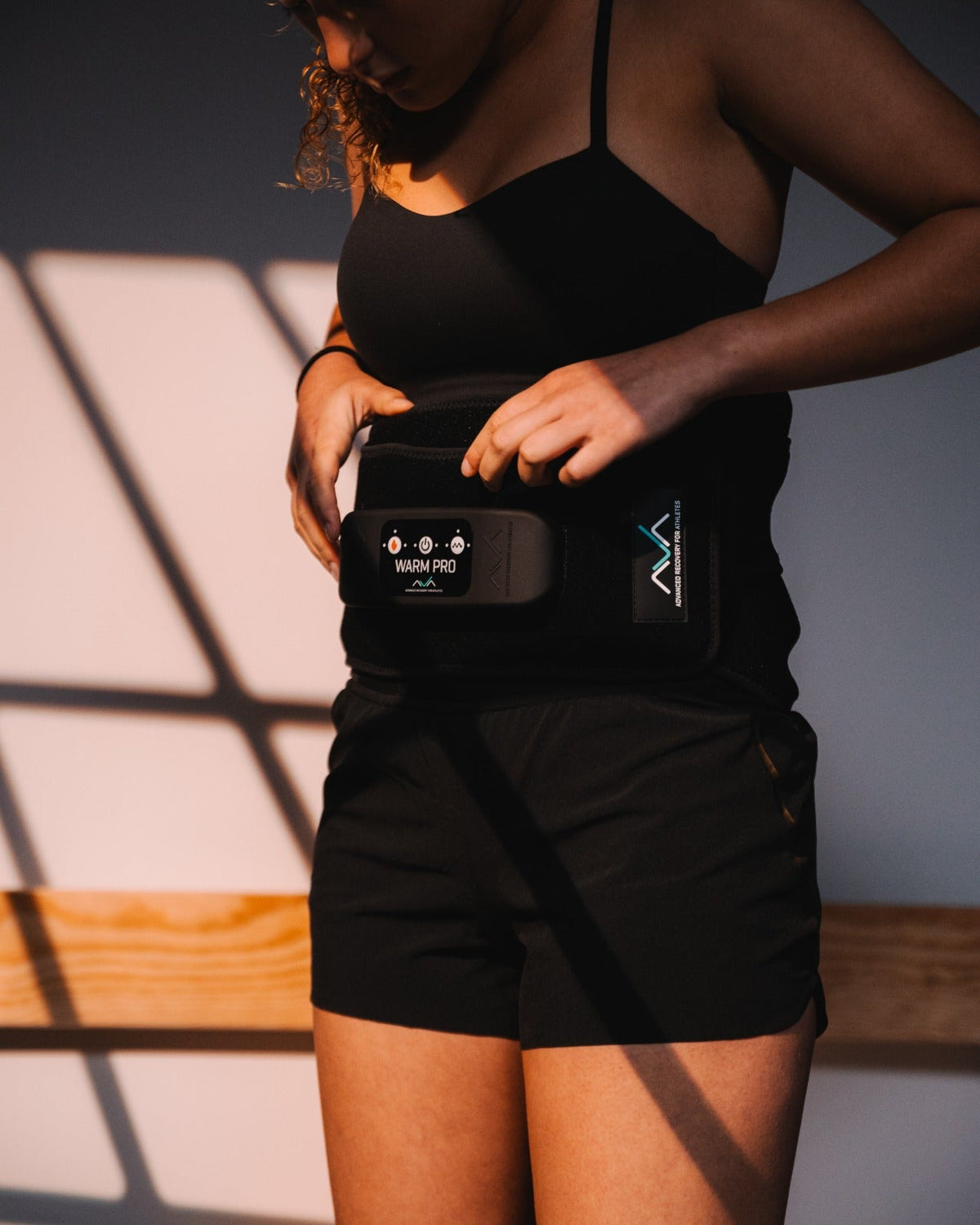
Warm Pro - Lumbar Thermal Belt
The Warm Pro was created precisely around this combination. It is a thermal belt designed to act locally on the lumbar region, with adjustable uniform heating between 45ºC, 50ºC, and 55ºC, and three vibration levels that adapt to each person's comfort.
It has its own battery with about three hours of autonomy, allowing it to be used before training, to prepare the muscles, or afterward, during the recovery phase. Each session is pre-programmed for 15 minutes, enough time for heat and vibration to act together without requiring more than that from the daily routine.

How to Use Warm Pro for Lower Back Pain
Simply adjust the belt around the lower back and press the button for 3 seconds to turn it on. Then, choose the heat level between 45ºC, 50ºC, and 55ºC, and the vibration mode you find most comfortable. The session is pre-programmed for 15 minutes, but if you want to finish earlier, just press the button again for 3 seconds.
It weighs just over 1 kg and the integrated battery offers about three hours of autonomy, making the equipment suitable both before training, to prepare the muscles, and after exercise, to accelerate recovery.
What Else Helps Prevent Lower Back Pain
Alleviating pain is just a quick fix. Preventing it from returning is the real problem, and it mainly depends on small changes in daily habits.
- A stronger core and glutes reduce the load on the lower back during exercise.
- Better hip mobility makes squats and lifts safer.
- Standing up regularly throughout the day prevents the stiffness that sets in after long periods of inactivity.
- Warming up before training prepares the muscles for the subsequent load and reduces the risk of sudden lower back overload.
- Reviewing lifting technique, keeping the spine neutral and using the legs to generate force, avoids transferring unnecessary weight to the lower back.
- Gradually progressing training load, without sudden increases in volume or intensity, gives the body time to adapt.
- Maintaining a balanced body weight reduces constant pressure on the lumbar discs and joints.
- Stress management helps, because accumulated emotional tension tends to manifest as muscle tension, especially in the lower back and neck.
- Choosing shoes with good support prevents postural compensations that overload the spine throughout the day.
- Adjusting posture at work, with the chair and screen at the right height, reduces accumulated pressure during hours of sitting.
- Getting enough sleep, in a position that does not strain the spine, is essential because tissues repair during sleep.
These habits help prevent the root of the problem, but they are not always enough to manage existing tension.
The Deep Light and the Myofascial Release Kit are good complements in these cases, helping to reduce muscle tension in other areas of the body, especially when lumbar discomfort does not appear alone.

When to Seek Professional Help
There are symptoms that should not be ignored or treated only at home. If lower back pain persists for more than two weeks, or if it is accompanied by numbness, tingling in the legs, loss of strength, or worsens at night, seek an evaluation from a physical therapist or doctor before continuing to train or trying new therapies.
Recover Your Lower Back Without Stopping Your Routine
Aside from these cases that require professional evaluation, recovery is mostly in your hands. Lower back pain rarely appears overnight, so it doesn't disappear overnight either. What makes a difference is consistency, that is, using the right tools regularly instead of waiting for the pain to go away on its own.
The Warm Pro was developed to be part of that routine.
